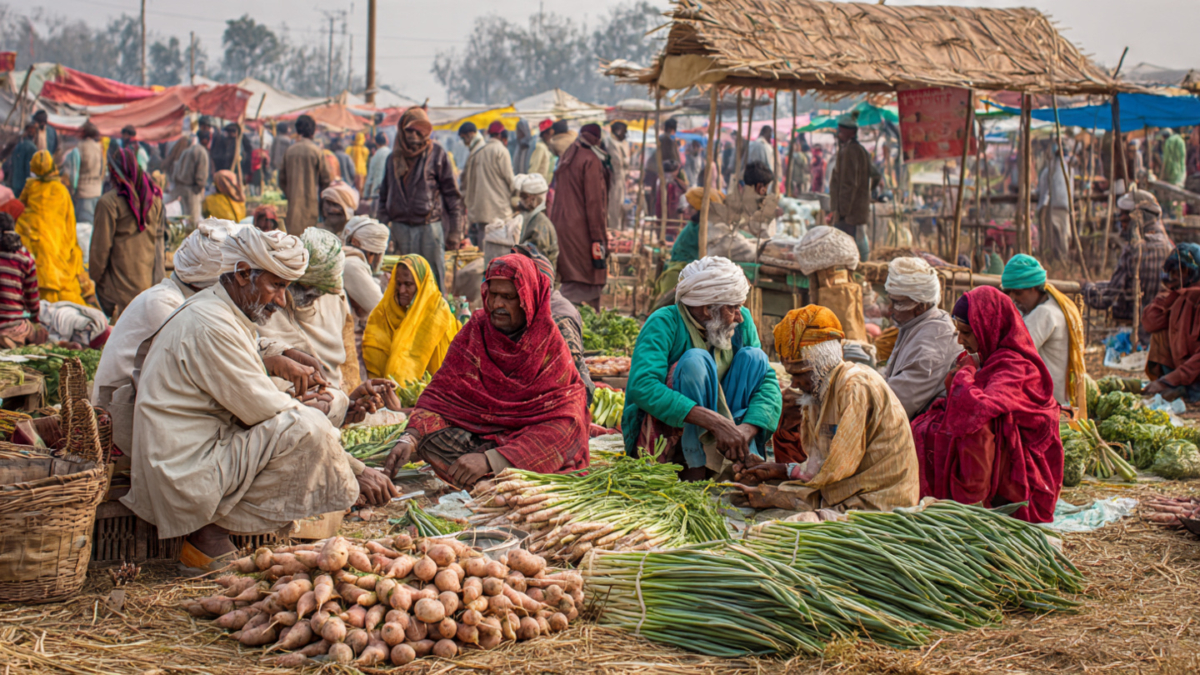
The three-day National Agriculture Fair held in Raisen, Madhya Pradesh, plays a crucial role in supporting Indian farmers by bringing together knowledge, technology, and government support on a single platform. Described as a “Krishi Mahakumbh” by Shivraj Singh Chouhan, the event functions like a living university where farmers can learn, interact, and explore solutions to improve their agricultural practices. It creates an environment where traditional knowledge meets modern innovation, helping farmers adapt to changing agricultural needs.
Access to Government Schemes
One of the biggest advantages of the agriculture fair is that it provides farmers with direct access to multiple government schemes in one place. Farmers often face challenges in understanding or accessing schemes, but this platform simplifies the process. Information and benefits related to schemes such as Pradhan Mantri Fasal Bima Yojana and Agricultural Infrastructure Fund are made easily available. This improves awareness and ensures that farmers can fully utilise these initiatives for their economic security and growth.

Strengthening Risk Management
The fair significantly helps farmers in managing agricultural risks, especially through crop insurance awareness. Under the Pradhan Mantri Fasal Bima Yojana, farmers are guided on how to secure their crops against natural disasters and losses. They receive practical knowledge about premiums, claim procedures, and loss reporting. In many cases, farmers can even obtain insurance coverage on the spot, making the process faster and more accessible. This reduces uncertainty and provides financial stability.
Improving Access to Credit and Infrastructure
Another important benefit of the fair is improved access to agricultural credit and infrastructure support. Farmers are informed about financial tools like Kisan Credit Cards and various loan options. Through the Agricultural Infrastructure Fund, they learn how to invest in storage facilities, cold chains, and processing units. This encourages farmers to move beyond basic cultivation and engage in value addition, which ultimately increases their income and reduces post-harvest losses.

Adoption of Modern Farming Techniques
The fair promotes the adoption of modern farming techniques by showcasing advanced equipment, drones, improved seed varieties, and scientific fertiliser usage. Experts explain these technologies in simple language, making them easy to understand and implement. As a result, farmers are able to increase productivity, reduce input costs, and adopt more efficient farming practices suited to current agricultural challenges.
Awareness of Farmers’ Rights
An important aspect of the fair is educating farmers about their legal rights. The Protection of Plant Varieties and Farmers’ Rights Authority provides guidance on seed ownership, protection of plant varieties, and conservation of traditional crops. This empowers farmers by giving them knowledge about their rights and helping them protect their agricultural resources.

Promotion of Sustainable and Organic Farming
The agriculture fair also encourages farmers to adopt sustainable and eco-friendly practices. It promotes organic farming methods such as composting, natural fertilisers, and reduced use of chemicals. These practices not only improve soil health but also lower production costs and ensure long-term agricultural sustainability. Farmers are motivated to shift towards environmentally friendly farming systems that are both profitable and sustainable.
Better Market Linkages and Income Opportunities
The fair helps farmers connect directly with markets through Farmer Producer Organisations (FPOs) and cooperative systems. By learning about direct marketing and institutional linkages, farmers can reduce their dependence on middlemen. This leads to better price realisation for their produce and increases their overall income. It also introduces them to crop diversification and value-added products, opening new avenues for growth.

Conclusion
Overall, the three-day National Agriculture Fair serves as a powerful platform for farmer empowerment in India. It bridges the gap between government policies and grassroots implementation while promoting innovation, sustainability, and financial inclusion. By combining education, technology, and market access, the fair helps farmers build a more secure, productive, and prosperous future.


Leave A Comment